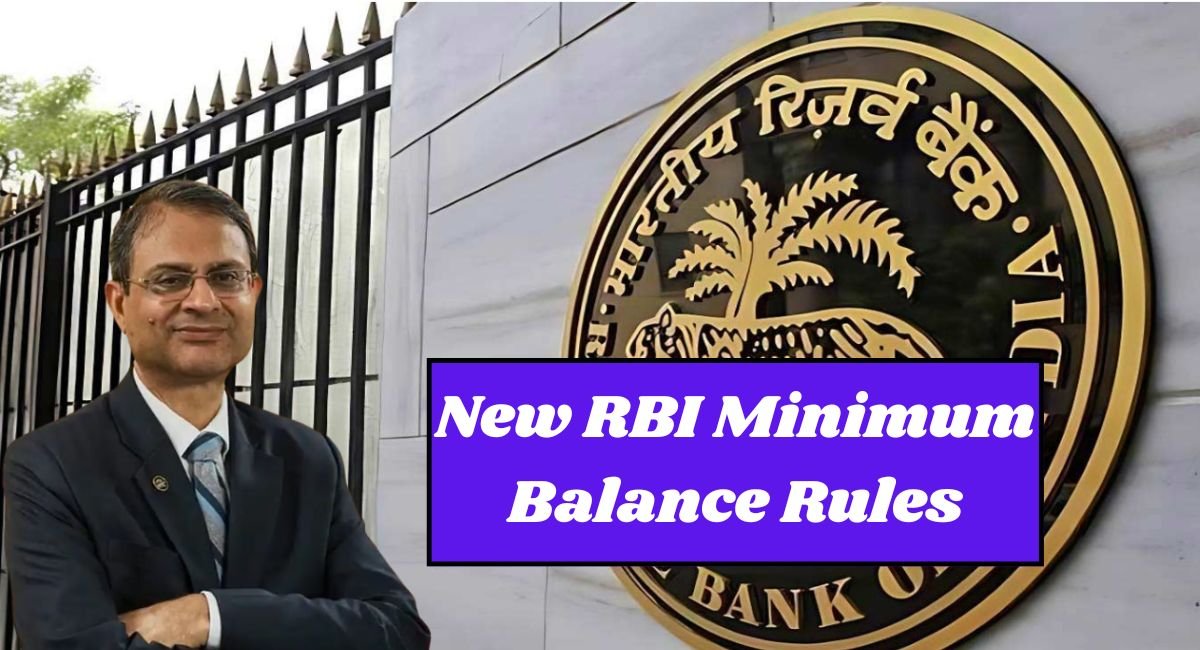
The Reserve Bank of India (RBI) has made a significant announcement regarding the new set of rules for the minimum balance requirements for saving accounts starting from January 2026. The main goal of these rules is to make banking more customer-centric by lessening the penalties and also by making sure that the banks practice fairly among themselves. The update is significant for millions of account holders who very often bear the brunt of the minimum balance maintenance requirement by way of charges.
What are Minimum Balance Rules?
Banks set a certain minimum amount which customers have to keep in their savings accounts. On the other hand, if the account falls below this prescribed limit, usually banks charge penalties. The new rules by the RBI equalize these conditions by giving customers all the banks’ different standards, thus providing them with power and rights.

Why the Update Matters
A lot of customers especially those that are in rural and semi-urban parts of the country cannot easily keep the minimum balance that is high. New rules are not only reducing the burden but also extending banking to more people. It is also a case of making it obvious and announcing in a very clear manner as to what the charges on account are thus shielding the client from unforeseen costs.
Key Points of RBI Minimum Balance Rules 2026
- Uniform Standards: Banks must not deviate from a common set of rules for minimum balance requirements.
- Lower Penalties: No longer will customers be charged for not maintaining minimum balance.
- Transparency: Customer rules and charges must be communicated to the customer in simple language.
- Digital Alerts: Customers are going to be notified through SMS or e-mail whenever their balance is close to limit.
- Exclusive Banking: Lower or zero minimum balance requirements will be applied to accounts in rural as well as basic-saving categories.
Latest Updates in 2026
| Feature | Earlier Rule (2025) | 2026 Update | Impact |
|---|---|---|---|
| Minimum Balance (Urban Accounts) | ₹5,000–₹10,000 | ₹2,500–₹5,000 | Reduced burden on customers |
| Minimum Balance (Rural Accounts) | ₹2,000–₹5,000 | ₹500–₹1,000 | More inclusive banking |
| Penalty Charges | ₹150–₹600 | ₹50–₹200 | Fairer and lower charges |
| Customer Alerts | Optional | Mandatory SMS/email | Better transparency |
| Basic Savings Accounts | Minimum balance required | Zero balance allowed | Greater access for all citizens |
Who Benefits Most
The rural customers and low-income households are the ones that are going to gain the most since the bank has made it very easy for them to maintain minimum balances through significantly reducing the requirements. And on the other hand urban customers also get the benefit of lower penalties and better clarity. Moreover, students, retirees, and minor accountholders easily obtain banking services without the fear of heavy fees.

Conclusion
The New RBI Minimum Balance Rules from January 2026 represent a drastic change in the direction of a more inclusive and customer-friendly banking system. The RBI has opened up savings accounts for millions of Indians by lowering the minimum balance limit, capping the penalties, and facilitating the process of understanding. This change not only builds up the trust of the people in the banking system but also guarantees that all citizens are treated fairly and that the financial services are supportive no matter what.